
The Evolution of Communication

Updated: 3 days ago

The Evolution of Communication
I. Warm-Up & Brainstorming
Activity 1: Group Discussion & Warm-Up
Discuss the following questions:
1. How do you communicate with your friends and family today?
2. How did your grandparents communicate with each other when they were young?
3. What is one old form of communication you have never used? (e.g., telegram, pager, fax machine)
II. Timeline Sorting (Warm-Up Game)
Put the following communication methods in order from oldest (1) to newest (6):
[ ] Smartphones & Social Media
[ ] Smoke Signals & Drums
[ ] The Printing Press
[ ] Letters & Mail (Pony Express / Postal System)
[ ] The Telephone
[ ] The Telegraph
III. Vocabulary:
1. Cave (Painting) (n):
Drawings made on cave walls by early humans to record history and communicate ideas.
2. Drum (n):
A percussion instrument used by ancient civilizations to send loud signals and messages across distances.
3. Carrier (n):
An animal or person trained to deliver messages or items.

4. Digital (adj.):
Relating to computers, electronic technology, and the internet.
5. Pigeon Post (n):
Using trained birds to carry written messages back and forth.
6. Printing Press (n):
A mechanical machine invented in 1440 for printing text and books quickly.
7. Morse Code (n):
A communication system using sequences of dots and dashes (sounds or light flashes).
8. Instantaneous (adj.):
Happening or completed immediately without any delay.
9. Revolutionize (v):
To completely and radically change the way something is done or organized.
1

IV. Reading Comprehension
From Cave Walls to Touchscreens
Communication is one of the most basic human needs. Thousands of years ago, early humans communicated using simple spoken sounds, hand gestures, and cave paintings. To send messages across long distances, ancient civilizations used smoke signals, drum beats, and carrier pigeons. In fact, many cultures relied on the pigeon post system to deliver important written notes quickly.
A major turning point occurred in 1440 when Johannes Gutenberg invented the printing press. Before this invention, books had to be copied by hand, which was very slow and expensive. The printing press allowed news and ideas to spread quickly across the world through newspapers and books.
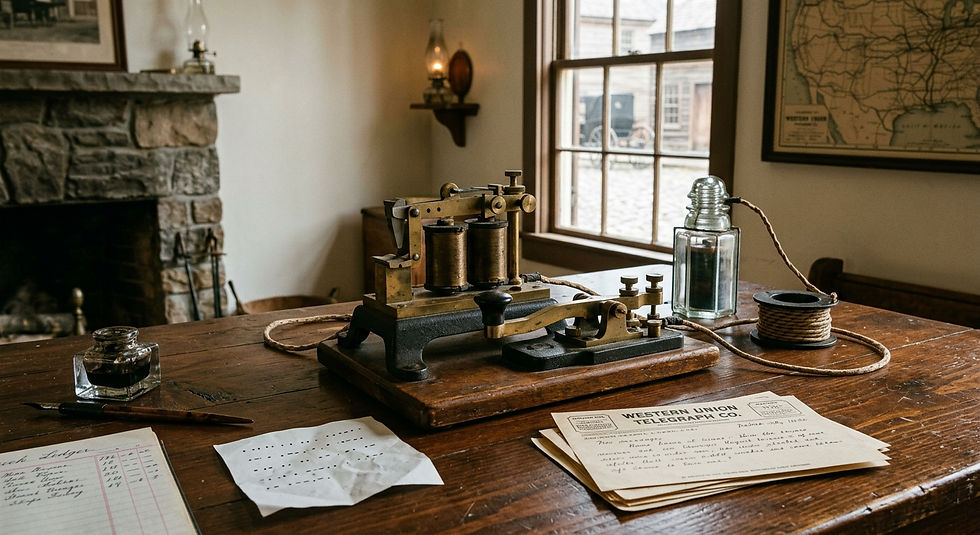
In the 19th century, communication changed rapidly due to electricity. In 1837, the telegraph was invented, allowing people to send electrical signals over long wires using Morse code. A few decades later, in 1876, Alexander Graham Bell invented the telephone, allowing human voices to travel across distances for the first time.
The late 20th and early 21st centuries brought the digital age. The invention of the internet and mobile phones revolutionized communication completely. Today, smartphones allow us to send text messages, make video calls, and share information on social media instantaneously, connecting people across the globe in seconds.
V. Answer the following questions:
1. According to the first paragraph, what methods did early humans use to communicate locally and across long distances?
__________________________________________________________________________
2. How did the pigeon post system work to deliver messages in ancient times?
__________________________________________________________________________3. Why was the invention of the printing press in 1440 considered a major turning point in history?
__________________________________________________________________________4. What was the main difference between sending messages with Morse code via the telegraph and using the telephone?
__________________________________________________________________________5. How did the arrival of the digital age revolutionize how people connect with one another?
__________________________________________________________________________6. Which of the communication methods mentioned in the passage do you think was the most impressive invention for its time, and why?
__________________________________________________________________________
2
VI. Read the definitions below. Find and write the matching vocabulary word from the vocabulary list:.
1. ___________________ (n): A mechanical machine invented in 1440 used to produce books and newspapers quickly and in large quantities.
2. ___________________ (adj.): Happening or completed immediately without any delay.
3. ___________________ (n): A communication system using sequences of dots and dashes sent as sounds or light flashes.
4. ___________________ (v): To completely and radically change the way something is done or organized.
5. ___________________ (adj.): Relating to computers, electronic devices, internet technology, and modern data systems.
6. ___________________ (n): A percussion instrument used by ancient civilizations to send loud rhythmic signals over long distances.
VII. Complete the following sentences with the correct word from the vocabulary list:
1. The invention of the internet ---------- how people connect and work.
2. The telegraph transmitted messages across long wires using ----------.
3. Sending an email or text message allows for ---------- communication.
4. Early humans communicated important events using ---------- paintings.
5. A ---------- pigeon successfully delivered the urgent message across the mountains.
6. Villages used rhythmic ---------- beats to warn neighboring settlements of danger.
7. We now live in a ---------- age where information is shared instantly worldwide.
8. The invention of the ----------- made books available to the general public.
9. In ancient times, people relied on ---------- to send news over long distances.
3
Grammar Focus:
A. Past Simple (Completed Actions at Specific Past Times)
Target Concept: Expressing specific historical milestones and past events.
Key Structures:
Regular & Irregular Past Tense verbs (invented, created, allowed, built, sent).
Specific time markers (In 1837, decades ago, in the 19th century).
Target Examples:
Alexander Graham Bell invented the telephone in 1876.
Ancient civilizations sent messages using carrier pigeons.
B. "Used to" (Past Habits, States, and Routines)
Target Concept: Comparing past states or regular habits that are no longer true today.
Key Structures:
{Subject} + {used to} + {base verb}
Target Examples:
People used to write long letters by hand.
Families used to wait weeks to receive news from overseas.
C. Past Perfect (Sequencing Two Actions in the Past)
Target Concept: Showing which action happened first before another past event occurred.
Key Structures:
{Subject} + {had} + {past participle}
Target Examples:
Before the printing press was invented, scribes had copied books by hand for centuries.
People had relied on smoke signals before electric communication existed.
I. Complete the Sentences using the correct form of the verb in parentheses:
1. Long ago, people ________________ (use to / send) messages using carrier pigeons, but today we send instant text messages.
2. In 1837, Samuel Morse ________________ (invent) the telegraph, which changed long-distance communication forever.
3. Before the telephone was invented in 1876, people ________________ (rely / already) on Morse code for fast long-distance messages.
4. Before smartphones became popular, many people ________________ (use to / carry) pagers or use public payphones.
5. In the late 20th century, the invention of the internet ________________ (transform) how people across the world shared information.
4
Speaking Activity: "Then and Now" Communication Interview
Work in pairs or small groups to answer the following questions:
1. Before the printing press was invented in 1440, what methods had scribes relied on for centuries to copy books and share information? (Target: Past Perfect)
2. How did ancient civilizations send urgent news before technology existed, and what methods did they use? (Target: Past Simple)
3. When you were a child, what tools or devices did your family use to communicate with relatives who lived far away? (Target: Used to)
4. Before Alexander Graham Bell invented the telephone in 1876, what fast long-distance communication system had inventors created? (Target: Past Simple & Past Perfect)
5. Before smartphones became popular, what did teenagers use to do to stay in touch with friends after school? (Target: Used to)
6. By the time you got your first computer or smartphone, how had digital technology already changed the way people work and connect? (Target: Past Perfect)
5



Comments