
The Global Phenomenon of the FIFA World Cup (Listening Practice) (Advanced)

Updated: Jun 8

The Global Phenomenon of the FIFA World Cup
Listen carefully to the following audio and choose the correct answer.
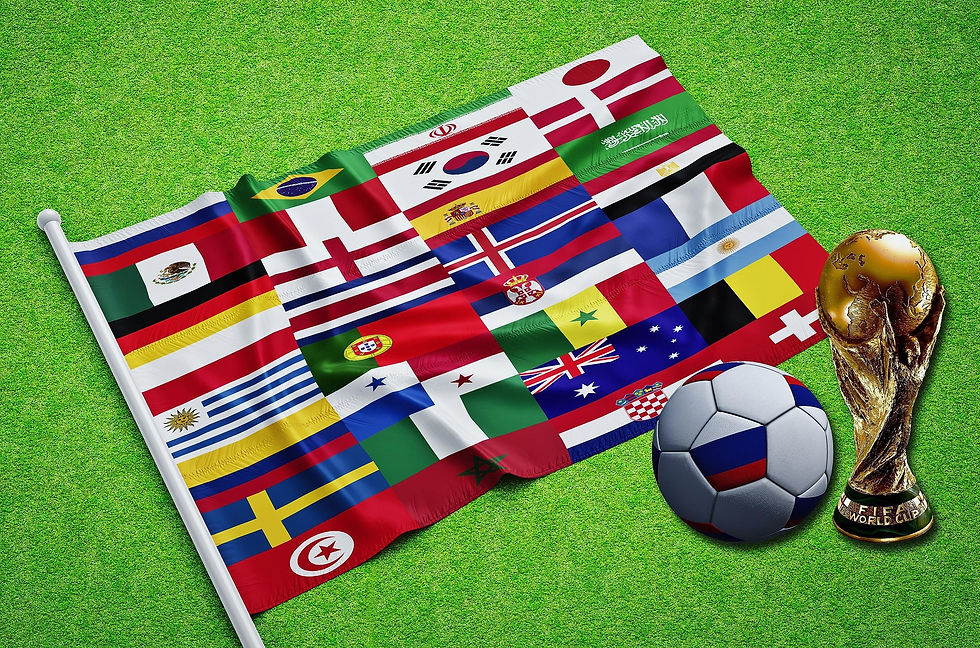
Choose the correct answer:
1. What is the primary purpose of the listening text?
A) To chronicle the historical evolution of the FIFA World Cup.
B) To critique the financial corruption within international sports organizations.
C) To analyze the multi-faceted economic and social impacts of the World Cup.
D) To argue that underdog teams deserve more representation in the tournament.
2. According to the text, what is a "white elephant" in the context of the World Cup?
A) A rare and highly prized mascot used to boost merchandise sales.
B) An expensive infrastructure project that becomes useless after the event.
C) A corporate sponsor that fails to generate a profit from the tournament.
D) A host nation that goes into severe bankruptcy due to poor planning.
3. The text states that for a host nation, securing the bid is a "monumental financial gamble." What does this imply?
A) Host nations often lose the rights to the tournament at the last minute.
B) The financial returns of hosting are highly uncertain and risky.
C) FIFA requires countries to bid using national lottery funds.
D) Tourism is guaranteed to decline immediately following the bid selection.
4. How are geopolitical tensions described as being handled during the World Cup?
A) They are permanently resolved through international diplomacy.
B) They are completely ignored by fans and media outlets alike.
C) They are temporarily redirected into athletic competition.
D) They are exacerbated, leading to increased conflict outside the stadiums.
5. What effect does an underdog victory have on a nation, according to the speaker?
A) It unites the citizens and creates a strong, temporary sense of shared identity.
B) It guarantees the country will win the entire tournament.
C) It causes immediate economic inflation due to over-celebration.
D) It discourages youth from participating in local sports programs.
6. Why does the author describe patriotism during the World Cup as a "double-edged sword"?
A) Because it helps teams win matches but lowers player morale.
B) Because it can unite a country but also transform into harmful hyper-nationalism.
C) Because it increases ticket sales but reduces television viewership numbers.
D) Because it satisfies local citizens but alienates international tourists.
7. Based on the text, what do proponents of hosting the World Cup argue?
A) It distracts the public from serious domestic political scandals.
B) It serves as a catalyst for long-term economic development and tourism.
C) It reduces the need for modernizing public transit systems.
D) It eliminates financial disparities between wealthy and poor nations.
8. Which sectors are mentioned as receiving billions of dollars in investments prior to the tournament?
A) Technology, agriculture, and military defense.
B) Education, healthcare, and renewable energy.
C) Stadiums, transit systems, and hospitality.
D) Environmental conservation and international trade.
9. What does the phrase "masking systemic domestic issues behind a facade of sporting success" mean?
A) Using the excitement of the tournament to temporarily hide a country's internal problems.
B) Improving the infrastructure of a country so thoroughly that poverty is eradicated.
C) Requiring athletes to wear masks during opening ceremonies for cultural reasons.
D) Forcing local citizens to pretend to be happy when international media arrives.
10. What is the speaker’s overall tone toward the FIFA World Cup?
A) Purely dismissive and highly critical of sports culture.
B) Uncritically enthusiastic and celebratory of corporate sponsors.
C) Objective and analytical, recognizing both positive and negative dimensions.
D) Indifferent and bored by the concept of international tournaments.


Comments